
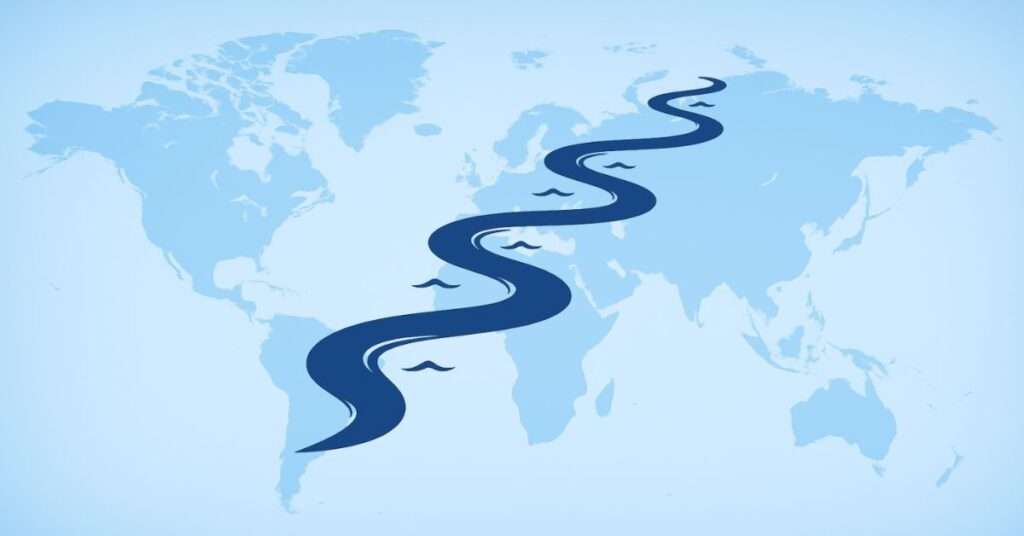
Rivers are among the most important natural features on Earth. The longest rivers in the world shape continents, support agriculture, provide drinking water, and power industries. From Africa to Asia and the Americas, these massive waterways influence global economies, ecosystems, and human history. Knowing which rivers are the longest helps us understand geography, climate patterns, and population distribution. The ranking of the world’s longest rivers is a popular topic because it combines science, exploration, and culture in a simple, easy-to-understand wa
Rivers are usually measured from their farthest source to their mouth, where they flow into an ocean, sea, or lake. However, measuring river length can be difficult because rivers have multiple branches, seasonal changes, and shifting paths. Scientists use satellite mapping, geographic surveys, and historical data to estimate river lengths. Differences in measurement methods sometimes lead to debates about rankings, but commonly accepted figures are used for global comparisons. These long rivers often cross several countries and climates, making them vital for trade, farming, and transportation throughout history.
Top 10 Longest Rivers in the World 2026
- Nile: 6650 km
- Amazon: 6400 km
- Yangtze: 6300 km
- Mississippi-Missouri: 6275 km
- Yenisei-Angara-Selenga: 5539 km
- Yellow: 5464 km
- Ob-Irtysh: 5410 km
- Parana: 4880 km
- Congo: 4700 km
- Amur-Argun: 4444 km
The Nile River leads the list as the longest river in the world, stretching across northeastern Africa and supporting millions of people. The Amazon River comes close, famous for its huge water volume and rainforest ecosystem. Asia dominates the rankings with major rivers like the Yangtze, Yellow, Yenisei system, and Ob-Irtysh. North America’s Mississippi-Missouri system also ranks high, forming one of the world’s biggest inland transport routes. These top rivers are long because they flow through vast plains and large basins, collecting water from thousands of smaller streams along the way.
Full Data Table
| # | River | Continent | Length (km) |
|---|---|---|---|
| 1 | Nile | Africa | 6,650 |
| 2 | Amazon | South America | 6,400 |
| 3 | Yangtze | Asia | 6,300 |
| 4 | Mississippi-Missouri | North America | 6,275 |
| 5 | Yenisei-Angara-Selenga | Asia | 5,539 |
| 6 | Yellow | Asia | 5,464 |
| 7 | Ob-Irtysh | Asia | 5,410 |
| 8 | Parana | South America | 4,880 |
| 9 | Congo | Africa | 4,700 |
| 10 | Amur-Argun | Asia | 4,444 |
| 11 | Lena | Asia | 4,400 |
| 12 | Mekong | Asia | 4,350 |
| 13 | Mackenzie-Slave-Peace-Finlay | North America | 4,241 |
| 14 | Niger | Africa | 4,180 |
| 15 | Murray-Darling | Australia | 3,672 |
| 16 | Tocantins-Araguaia | South America | 3,650 |
| 17 | Volga | Europe | 3,530 |
| 18 | Indus | Asia | 3,180 |
| 19 | Brahmaputra | Asia | 2,900 |
| 20 | Danube | Europe | 2,850 |
| 21 | Japura-Caqueta | South America | 2,820 |
| 22 | Salween | Asia | 2,815 |
| 23 | Nelson-Saskatchewan | North America | 2,575 |
| 24 | Zambezi | Africa | 2,574 |
| 25 | Amu Darya | Asia | 2,540 |
| 26 | Ganges | Asia | 2,525 |
| 27 | Colorado | North America | 2,330 |
| 28 | Dnieper | Europe | 2,201 |
| 29 | Orange | Africa | 2,200 |
| 30 | Irrawaddy | Asia | 2,170 |
| 31 | Orinoco | South America | 2,140 |
| 32 | Columbia | North America | 2,000 |
| 33 | Yukon | North America | 1,980 |
| 34 | Don | Europe | 1,950 |
| 35 | Limpopo | Africa | 1,750 |
| 36 | Churchill | North America | 1,609 |
| 37 | Volta | Africa | 1,600 |
| 38 | Dniester | Europe | 1,362 |
| 39 | Rhine | Europe | 1,230 |
| 40 | Elbe | Europe | 1,094 |
| 41 | Vistula | Europe | 1,047 |
| 42 | Loire | Europe | 1,012 |
| 43 | Tagus | Europe | 1,007 |
| 44 | Ebro | Europe | 930 |
| 45 | Oder | Europe | 854 |
| 46 | Seine | Europe | 777 |
| 47 | Guadiana | Europe | 744 |
| 48 | Po | Europe | 652 |
| 49 | Tiber | Europe | 406 |
| 50 | Thames | Europe | 346 |
Key Points
- Africa and Asia together host most of the world’s longest rivers.
- The Nile and Amazon are close in length, but the Amazon carries more water volume.
- Asia has multiple rivers in the top rankings due to its vast landmass and large drainage basins.
- The Mississippi-Missouri system shows how connected river networks increase total river length.
- Many of the longest rivers cross multiple countries, making them important for international cooperation.
- South America’s Parana and Congo rivers are major economic lifelines in their regions.
- Some river systems include several rivers combined into one measurement, such as Yenisei-Angara-Selenga.
- Long rivers usually flow through fertile plains, supporting large populations and agriculture.
The world’s longest rivers continue to play a major role in shaping human life and natural ecosystems. As populations grow and climate patterns change, managing river water responsibly becomes more important than ever. These rivers are not just geographical records; they are lifelines for food, energy, and transportation. Understanding their scale helps us appreciate their value and the need to protect them for future generations. With better technology and global cooperation, river research will continue to improve, helping us use these powerful natural resources wisely.
Related Articles
- Longest Mountain Ranges in the World
- Longest Coastlines by Country
- Longest Mountain Passes
- Longest Cave Systems in the World
- Longest Deserts in the World