
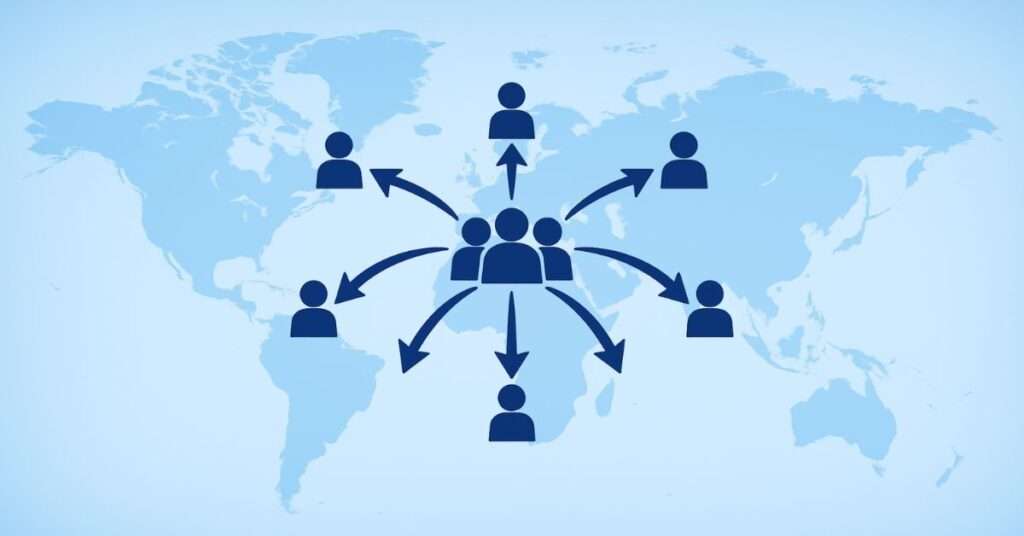
Migration has become one of the defining features of the modern world. People move across borders for work, education, safety, family, and better living conditions. Over time, these movements create large migrant diasporas—communities of people living outside their country of origin. The size of a country’s diaspora matters because it reflects global mobility patterns, economic connections, and cultural influence. Countries with large migrant populations abroad often have strong global links through remittances, labor markets, and international networks. Understanding the largest migrant diasporas helps explain how deeply interconnected today’s world has become.
Migrant diaspora data is usually measured by counting people born in one country who live permanently or long-term in another country. These figures are compiled from national censuses, population registers, and international migration estimates. Rankings are based on total population size abroad, not temporary travel or tourism. Geography, history, labor demand, political changes, and globalization all influence these numbers. Countries with large populations, past migration waves, or strong overseas job opportunities often dominate the rankings. Over time, wars, economic shifts, and policy changes can rapidly reshape diaspora patterns across regions.
Top 10 Largest Migrant Diasporas in the World 2026
- Poland: 20 million
- India: 18 million
- Germany: 12.3 million
- Mexico: 11.8 million
- Russia: 10.8 million
- China: 10.6 million
- Indonesia: 9 million
- Bangladesh: 8.1 million
- Pakistan: 7.9 million
- Ukraine: 6.6 million
The top of the list is led by Poland, which has the largest migrant diaspora among the top ten. This reflects decades of migration across Europe and beyond, especially following economic integration within the European Union. India follows closely, supported by a long history of overseas labor migration and a strong global professional presence. Germany and Mexico stand out due to regional mobility within Europe and North America. Russia and China reflect both historical movements and modern economic migration. Countries like Bangladesh, Pakistan, and Ukraine show how labor demand and regional instability can significantly increase overseas populations within a relatively short period.
Full Data Table
| # | Origin Country | Diaspora population |
|---|---|---|
| 1 | Poland | 20,000,000 |
| 2 | India | 18,000,000 |
| 3 | Germany | 12,300,000 |
| 4 | Mexico | 11,800,000 |
| 5 | Russia | 10,800,000 |
| 6 | China | 10,600,000 |
| 7 | Indonesia | 9,000,000 |
| 8 | Bangladesh | 8,100,000 |
| 9 | Pakistan | 7,900,000 |
| 10 | Ukraine | 6,600,000 |
| 11 | Syria | 6,500,000 |
| 12 | Turkey | 6,500,000 |
| 13 | Philippines | 6,100,000 |
| 14 | Italy | 6,000,000 |
| 15 | United Kingdom | 5,600,000 |
| 16 | Egypt | 4,800,000 |
| 17 | Nigeria | 4,200,000 |
| 18 | Afghanistan | 3,700,000 |
| 19 | Brazil | 3,700,000 |
| 20 | France | 3,500,000 |
| 21 | Romania | 3,400,000 |
| 22 | Morocco | 3,300,000 |
| 23 | Vietnam | 3,100,000 |
| 24 | Spain | 3,100,000 |
| 25 | Algeria | 2,900,000 |
| 26 | Iran | 2,800,000 |
| 27 | Colombia | 2,300,000 |
| 28 | Japan | 1,400,000 |
| 29 | Thailand | 1,300,000 |
| 30 | South Africa | 1,000,000 |
Key Points
- European countries feature prominently, showing strong regional mobility within Europe.
- Large populations tend to generate larger migrant diasporas over time.
- Economic migration remains a major driver for South and Southeast Asian countries.
- Neighboring regions often host the largest shares of each country’s diaspora.
- Political and economic transitions can sharply increase migration levels.
- Several top-ranked countries have long-established migrant networks abroad.
The largest migrant diasporas highlight how movement across borders has become a normal part of global life. These communities play a vital role in shaping economies, cultures, and international relationships. Remittances support families at home, while migrants contribute skills and labor to host countries. As globalization continues and population pressures grow, migration patterns are likely to evolve further. Some countries may see their overseas populations expand, while others stabilize due to changing policies or economic conditions. Overall, migrant diasporas will remain a powerful force linking nations and shaping the global population landscape in the years ahead.
Related Articles
- Largest Islands in the World
- Largest Mountain Ranges in the World
- Largest Religious Populations
- Largest Language Populations
- Largest Migrant Diasporas